
LED-Außendisplays für abgerundete Ecken und 360°-Säulen

In der sich schnell entwickelnden Welt der LED-Technologie erfreuen sich GOB-LED-Displays (Glue On Board) aufgrund ihrer verbesserten Haltbarkeit, Zuverlässigkeit und visuellen Leistung zunehmender Anerkennung. Ob Sie eine LED-Lösung für eine gewerbliche Umgebung, eine gemietete Eventbühne oder einen interaktiven öffentlichen Raum in Betracht ziehen, die GOB-Technologie könnte die passende Lösung für Sie sein. Doch was genau ist ein GOB-LED-Display und – noch wichtiger – welche Vorteile bietet es?
Die Wahl des richtigen LED-Displays für Ihr Schaufenster

In der sich schnell entwickelnden Welt der LED-Technologie erfreuen sich GOB-LED-Displays (Glue On Board) aufgrund ihrer verbesserten Haltbarkeit, Zuverlässigkeit und visuellen Leistung zunehmender Anerkennung. Ob Sie eine LED-Lösung für eine gewerbliche Umgebung, eine gemietete Eventbühne oder einen interaktiven öffentlichen Raum in Betracht ziehen, die GOB-Technologie könnte die passende Lösung für Sie sein. Doch was genau ist ein GOB-LED-Display und – noch wichtiger – welche Vorteile bietet es?
LED-Videowände für Bowlingbahnen

In der sich schnell entwickelnden Welt der LED-Technologie erfreuen sich GOB-LED-Displays (Glue On Board) aufgrund ihrer verbesserten Haltbarkeit, Zuverlässigkeit und visuellen Leistung zunehmender Anerkennung. Ob Sie eine LED-Lösung für eine gewerbliche Umgebung, eine gemietete Eventbühne oder einen interaktiven öffentlichen Raum in Betracht ziehen, die GOB-Technologie könnte die passende Lösung für Sie sein. Doch was genau ist ein GOB-LED-Display und – noch wichtiger – welche Vorteile bietet es?
Was ist ein flexibles LED-Display?

In der sich schnell entwickelnden Welt der LED-Technologie erfreuen sich GOB-LED-Displays (Glue On Board) aufgrund ihrer verbesserten Haltbarkeit, Zuverlässigkeit und visuellen Leistung zunehmender Anerkennung. Ob Sie eine LED-Lösung für eine gewerbliche Umgebung, eine gemietete Eventbühne oder einen interaktiven öffentlichen Raum in Betracht ziehen, die GOB-Technologie könnte die passende Lösung für Sie sein. Doch was genau ist ein GOB-LED-Display und – noch wichtiger – welche Vorteile bietet es?
Was ist der Pixelabstand bei LED-Displays?

In der sich schnell entwickelnden Welt der LED-Technologie erfreuen sich GOB-LED-Displays (Glue On Board) aufgrund ihrer verbesserten Haltbarkeit, Zuverlässigkeit und visuellen Leistung zunehmender Anerkennung. Ob Sie eine LED-Lösung für eine gewerbliche Umgebung, eine gemietete Eventbühne oder einen interaktiven öffentlichen Raum in Betracht ziehen, die GOB-Technologie könnte die passende Lösung für Sie sein. Doch was genau ist ein GOB-LED-Display und – noch wichtiger – welche Vorteile bietet es?
Wie wähle ich ein GOB-LED-Display aus?
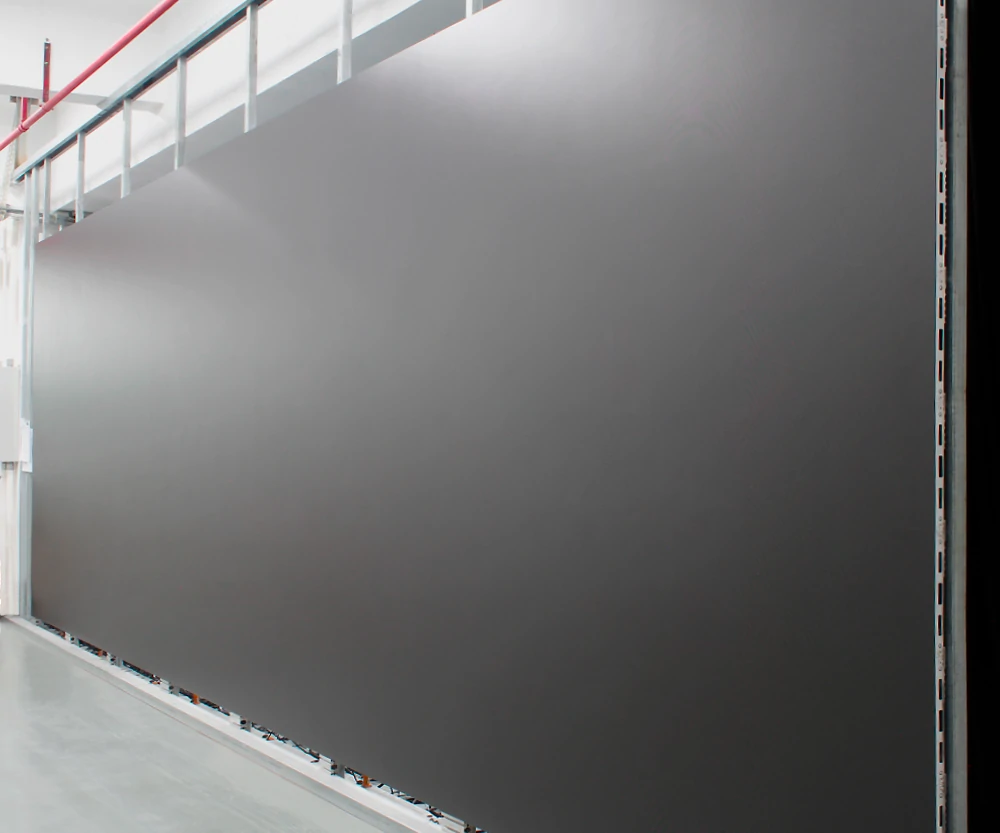
How Should I Choose a GOB LED Display? GOB LED displays (Glue on Board) have gained popularity for their durability, water resistance, and superior visual performance. As more businesses and consumers consider this advanced LED technology, one key question arises: How should I choose a GOB LED display? 1. What Is a GOB LED Display? A GOB LED display uses a protective transparent glue layer over the LED modules, providing better protection against: Water and moisture Dust and physical impact UV rays and oxidation This makes GOB LED screens ideal for high-traffic areas, outdoor advertising, rental applications, and environments where screens are exposed to harsh conditions. 2. Determine Your Application Before choosing a GOB LED display, identify the primary use case: Outdoor Advertising: Look for high brightness (5,000–10,000 nits) and IP65 waterproof rating. Indoor Installations: Choose displays with finer pixel pitch (P1.5–P3) for high-resolution visuals. Events & Rental Applications: Consider modular designs for easy assembly and portability. Retail or Storefront Displays: Go for a slim, lightweight design with strong color accuracy. 3. Pixel Pitch and Resolution The pixel pitch (distance between LED pixels) is critical: Smaller pixel pitch (P1.2, P1.5) = higher resolution, best for close viewing. Larger pixel pitch (P4, P5) = cost-effective for distant viewing, like billboards. Always match pixel pitch with viewing distance to achieve the sharpest image quality. 4. Brightness and Contrast Ratio Brightness affects how visible your display will be in different lighting conditions: Outdoor GOB LED displays: Minimum 5,000 nits for daytime visibility. Indoor displays: 800–1,500 nits is usually sufficient. High contrast ratios also improve color vibrancy and image depth. 5. Durability and Protection Features When selecting a GOB LED display, prioritize screens with: Impact resistance to withstand accidental hits Waterproofing and dustproofing (IP65 or higher for outdoor) Anti-UV coating to prevent fading These features ensure longer life cycles and lower maintenance costs. 6. Energy Efficiency and Maintenance Opt for energy-efficient GOB LED displays that consume less power without sacrificing brightness. Additionally, front-serviceable panels make maintenance easier, especially for fixed installations. 7. Choosing a Reliable Manufacturer Work with reputable suppliers like LEDCOMS, who specialize in high-quality GOB LED displays and offer: Factory-direct pricing Custom designs (indoor, outdoor, curved, or flexible panels) Professional installation and after-sales support Always check certifications (CE, RoHS) and request product demos before purchase. 8. Budget and Total Cost of Ownership While GOB LED displays might have a slightly higher upfront cost, they save money in the long run due to: Fewer repairs Lower risk of damage Longer operational lifespan Consider both the initial cost and ongoing maintenance when comparing options. Selecting the Right GOB LED Display Choosing a GOB LED display involves balancing resolution, durability, brightness, and cost with your specific needs. For reliable performance and customization, manufacturers like LEDCOMS are industry leaders that can provide tailored solutions. By considering viewing distance, pixel pitch, and environmental conditions, you can confidently select a GOB LED display that delivers outstanding visuals and long-term value. GOB LED displays (Glue on Board) have gained popularity for their durability, water resistance, and superior visual performance. As more businesses and consumers consider this advanced LED technology, one key question arises: How should I choose a GOB LED display? 1. What Is a GOB LED Display? A GOB LED display uses a protective transparent glue layer over the LED modules, providing better protection against: Water and moisture Dust and physical impact UV rays and oxidation This makes GOB LED screens ideal for high-traffic areas, outdoor advertising, rental applications, and environments where screens are exposed to harsh conditions. 2. Determine Your Application Before choosing a GOB LED display, identify the primary use case: Outdoor Advertising: Look for high brightness (5,000–10,000 nits) and IP65 waterproof rating. Indoor Installations: Choose displays with finer pixel pitch (P1.5–P3) for high-resolution visuals. Events & Rental Applications: Consider modular designs for easy assembly and portability. Retail or Storefront Displays: Go for a slim, lightweight design with strong color accuracy. 3. Pixel Pitch and Resolution The pixel pitch (distance between LED pixels) is critical: Smaller pixel pitch (P1.2, P1.5) = higher resolution, best for close viewing. Larger pixel pitch (P4, P5) = cost-effective for distant viewing, like billboards. Always match pixel pitch with viewing distance to achieve the sharpest image quality. 4. Brightness and Contrast Ratio Brightness affects how visible your display will be in different lighting conditions: Outdoor GOB LED displays: Minimum 5,000 nits for daytime visibility. Indoor displays: 800–1,500 nits is usually sufficient. High contrast ratios also improve color vibrancy and image depth. 5. Durability and Protection Features When selecting a GOB LED display, prioritize screens with: Impact resistance to withstand accidental hits Waterproofing and dustproofing (IP65 or higher for outdoor) Anti-UV coating to prevent fading These features ensure longer life cycles and lower maintenance costs. 6. Energy Efficiency and Maintenance Opt for energy-efficient GOB LED displays that consume less power without sacrificing brightness. Additionally, front-serviceable panels make maintenance easier, especially for fixed installations. 7. Choosing a Reliable Manufacturer Work with reputable suppliers like LEDCOMS, who specialize in high-quality GOB LED displays and offer: Factory-direct pricing Custom designs (indoor, outdoor, curved, or flexible panels) Professional installation and after-sales support Always check certifications (CE, RoHS) and request product demos before purchase. 8. Budget and Total Cost of Ownership While GOB LED displays might have a slightly higher upfront cost, they save money in the long run due to: Fewer repairs Lower risk of damage Longer operational lifespan Consider both the initial cost and ongoing maintenance when comparing options. Selecting the Right GOB LED Display Choosing a GOB LED display involves balancing resolution, durability, brightness, and cost with your specific needs. For reliable performance and customization, manufacturers like LEDCOMS are industry leaders that can provide tailored solutions. By considering viewing distance, pixel pitch, and environmental conditions, you can confidently select a GOB LED display that delivers outstanding visuals and long-term value. PrevPreviousAre Church LED Video Walls Customizable? NextWhat Is Pixel Pitch in LED Displays?Next INDOOR
Sind LED-Videowände für Kirchen anpassbar?
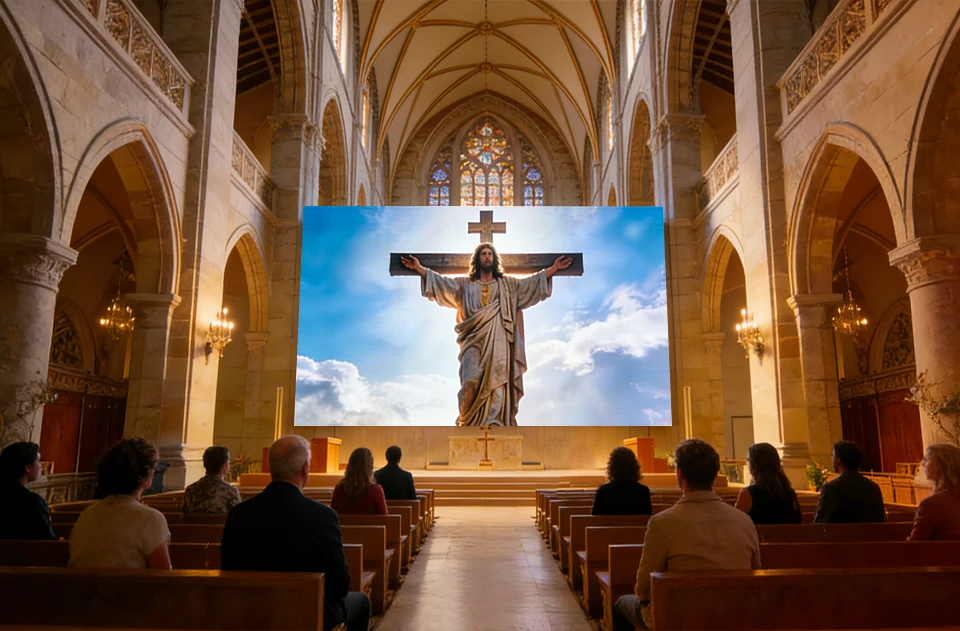
Are Church LED Video Walls Customizable? Yes, church LED video walls are highly customizable, offering a wide range of options to meet the specific needs and preferences of a church’s worship environment. Customization options allow churches to create a unique visual experience that aligns with their mission, branding, and the style of their services. Below, we explore the various ways in which church LED video walls can be tailored to fit the requirements of a congregation. 1. Screen Size and Shape Modular Design: LED video walls are typically made up of modular panels, which can be arranged in various configurations to fit different space requirements. These panels can be stacked horizontally or vertically, allowing for customized screen sizes. Curved or Flat Screens: LED walls can be designed to be either flat or curved. A curved video wall can create a more immersive viewing experience, especially in larger auditoriums, while a flat wall is ideal for traditional layouts. Some churches opt for architecturally integrated screens that follow the contours of the stage or building design. Custom Shapes: For churches with specific aesthetic or branding needs, LED walls can be built in custom shapes, such as circular, triangular, or even abstract forms. This level of customization is particularly beneficial for creating unique, attention-grabbing designs that enhance the overall worship atmosphere. 2. Pixel Pitch and Resolution Pixel Pitch: The pixel pitch (the distance between individual pixels) can be customized based on the viewing distance and content requirements. For churches with close viewing distances, a high pixel pitch (e.g., P2.5, P3) is ideal for sharp, crisp visuals. For larger venues, a larger pixel pitch (e.g., P4, P6) can be used to balance cost and performance. Resolution: LED walls can be customized in terms of resolution, ensuring the wall provides optimal image quality. Churches can choose from HD, 4K, or higher resolution options, depending on their budget and content needs. Higher resolutions are great for displaying detailed content, such as live video feeds, scriptures, and intricate images. 3. Content Flexibility and Integration Multiple Content Zones: Many church LED walls can display multiple content zones at once. For example, one section could show lyrics, while another displays a live feed of the pastor, and a third area could display sermon notes or images. This multiscreen approach helps churches engage the congregation by providing various forms of content simultaneously. Interactive Content: Some LED video walls allow for interactive elements, such as live polling, questions, or audience participation during services. This can be particularly valuable for engaging with the congregation during special events or services. Seamless Integration with AV Systems: LED video walls can be fully integrated with the church’s existing audio-visual systems, including cameras, video servers, and media players. This allows churches to customize the content being displayed in real time, whether it’s live streaming, pre-recorded videos, or dynamic media presentations. 4. Color and Brightness Settings Color Customization: LED video walls offer a wide spectrum of color settings that can be adjusted to match the church’s branding or the theme of a particular service. Brightness and contrast levels can also be customized to optimize visibility in different lighting conditions, ensuring the display is clear during both day and night services. Adaptable Brightness: LED walls are designed to adapt to changing lighting conditions, which is especially important in churches with variable light levels. Automatic brightness adjustment ensures that the wall remains visible even in low-light settings during evening services or worship events. 5. Special Effects and Visual Enhancements Dynamic Visuals: LED video walls offer the ability to create dynamic visual effects such as transitions, animations, and motion graphics. This is useful for enhancing worship experiences, such as transitioning between different segments of the service (e.g., from worship songs to sermon time) or showing dramatic visual backdrops during key moments. Video Walls for Special Events: Churches can create special effects or custom visuals for events such as Christmas, Easter, baptisms, and weddings. LED walls can display tailored content that reflects the unique themes or messages of these events. 6. Architectural Integration Custom Framing and Mounting: LED video walls can be integrated into the architecture of the church, from framing to mounting. For example, the video wall could be framed to match the style of the church, or integrated into the stage, pulpit area, or even as a backdrop to the worship team. Churches can work with design teams to ensure the LED wall complements the architectural features of the building. Design Aesthetics: The frame of the LED wall itself can be customized to fit the church’s aesthetic, whether it’s sleek and modern, traditional, or rustic. Some churches opt for frameless designs to create a more contemporary, high-tech look. 7. Flexible Mounting and Placement Wall-Mounted vs. Freestanding: Churches can choose between wall-mounted LED walls, which are fixed to the church structure, or freestanding LED walls that can be moved or repositioned depending on the service or event. Freestanding walls are especially useful for churches with multiple service areas or flexible event spaces. Ceiling-Mounted or Suspended: In churches with limited floor space, LED video walls can be suspended from the ceiling or mounted above the stage area. This allows the congregation to view content from any angle, making it ideal for large, open sanctuaries. 8. Weather Resistance (for Outdoor Installations) Outdoor Customization: For churches with outdoor worship spaces or events, LED video walls can be customized to withstand weather conditions. IP65 or higher-rated outdoor LED video walls are designed to be waterproof and dustproof, making them suitable for all-weather conditions, from rain to snow. 9. Maintenance and Serviceability Modular Components: LED walls are designed with modular panels that can be easily swapped or replaced if a part fails. This ensures that maintenance is straightforward and cost-effective, as individual panels can be replaced without the need to overhaul the entire system. Remote Monitoring and Management: Many LED video wall systems come with software that allows for remote monitoring and
Wie wählt man die richtige digitale LED-Anzeige aus?

How to choose the right LED digital display? Choosing the right LED digital display for your business involves several important factors to ensure it meets your needs and delivers the best performance. Here’s a guide on how to make the right choice: 1. Understand Your Purpose and Application Indoor vs. Outdoor: Determine whether the display will be used indoors or outdoors. Outdoor LED displays require weatherproofing, higher brightness levels, and more durability to handle environmental factors such as sunlight, rain, and wind. Content Type: Consider the type of content you’ll be displaying—whether it’s text, images, videos, or dynamic ads. This will influence the resolution and size of the screen. 2. Select the Right Pixel Pitch Pixel Pitch: The pixel pitch refers to the distance between two LEDs. A smaller pixel pitch means higher resolution and better image quality, especially for close viewing distances. Viewing Distance: If the audience will be close to the display (e.g., in a retail store), you’ll need a smaller pixel pitch (e.g., P2.0 to P3.0). For larger viewing distances (e.g., digital billboards), a higher pixel pitch (e.g., P5.0 or higher) may suffice. 3. Choose the Appropriate Display Size Display Size: Based on the available space and viewing distance, select the appropriate size for your display. For indoor settings like corporate lobbies or stores, a medium-size screen might be ideal. For large outdoor advertising, a bigger screen is necessary to attract attention from far away. Aspect Ratio: Ensure the aspect ratio (width vs. height) of the display suits your content. Common ratios like 16:9 are often preferred for video content. 4. Consider Brightness Levels Indoor Brightness: For indoor displays, a brightness level of 600–1,000 nits is usually sufficient to ensure visibility under artificial lighting. Outdoor Brightness: Outdoor displays need higher brightness, typically 4,000–10,000 nits, to remain visible under direct sunlight. 5. Evaluate the Display Resolution Resolution: The resolution is crucial for image clarity and sharpness. Higher resolutions are recommended for displays with more detailed content or those viewed up close. Content Type: If your content involves detailed images or small text, opt for a higher-resolution display. Lower resolutions may be acceptable for simple text or less detailed images. 6. Energy Efficiency Power Consumption: Consider the energy efficiency of the LED display, especially for larger or outdoor displays that may run 24/7. Energy-efficient displays will reduce long-term operating costs. 7. Check Durability and Lifespan Durability: Outdoor LED displays must be built to withstand harsh weather conditions, while indoor displays should be durable enough for long-term use. Lifespan: Look for high-quality components and technologies (such as GOB or COB) that enhance the durability and lifespan of the display. 8. Control System and Software Compatibility Ease of Use: Choose an LED display with a user-friendly control system that allows easy content management, scheduling, and remote operation if necessary. Compatibility: Ensure the control system is compatible with the input devices or media sources you plan to use, such as computers, digital signage players, or streaming devices. 9. Budget and Total Cost of Ownership Initial Costs: Factor in the upfront cost of purchasing the LED display, including customization, size, and resolution. Maintenance and Operating Costs: Consider the long-term costs such as energy consumption, repairs, and maintenance. Opting for a high-quality display may result in lower maintenance costs over time. 10. Customization and Flexibility Custom Designs: If your business needs unique designs (e.g., curved, flexible, or interactive displays), ensure the display provider offers customization options. Scalability: Look for modular designs that allow you to expand or reconfigure your display as your needs evolve. 11. Consider Installation and Maintenance Installation Requirements: Some LED displays require professional installation. Ensure the installation process is smooth and that your space is suitable for mounting the display. Maintenance: Choose displays with easily replaceable parts or modular designs that make maintenance simpler and cost-effective. 12. Reputable Supplier Supplier Reputation: Work with a reputable LED display supplier like LEDCOMS, who offers warranties, reliable customer support, and quality products. Technical Support: Ensure that the supplier provides adequate technical support and after-sales service in case you need assistance with installation, maintenance, or repairs. To choose the right LED digital display for your business, you must evaluate your specific needs, consider pixel pitch, resolution, brightness, durability, and budget. Working with a trusted supplier and understanding how the display will be used can help you make an informed decision that delivers great results for your business. Choosing the right LED digital display for your business involves several important factors to ensure it meets your needs and delivers the best performance. Here’s a guide on how to make the right choice: 1. Understand Your Purpose and Application Indoor vs. Outdoor: Determine whether the display will be used indoors or outdoors. Outdoor LED displays require weatherproofing, higher brightness levels, and more durability to handle environmental factors such as sunlight, rain, and wind. Content Type: Consider the type of content you’ll be displaying—whether it’s text, images, videos, or dynamic ads. This will influence the resolution and size of the screen. 2. Select the Right Pixel Pitch Pixel Pitch: The pixel pitch refers to the distance between two LEDs. A smaller pixel pitch means higher resolution and better image quality, especially for close viewing distances. Viewing Distance: If the audience will be close to the display (e.g., in a retail store), you’ll need a smaller pixel pitch (e.g., P2.0 to P3.0). For larger viewing distances (e.g., digital billboards), a higher pixel pitch (e.g., P5.0 or higher) may suffice. 3. Choose the Appropriate Display Size Display Size: Based on the available space and viewing distance, select the appropriate size for your display. For indoor settings like corporate lobbies or stores, a medium-size screen might be ideal. For large outdoor advertising, a bigger screen is necessary to attract attention from far away. Aspect Ratio: Ensure the aspect ratio (width vs. height) of the display suits your content. Common ratios like 16:9 are often
Was ist ein COB-LED-Bildschirm?
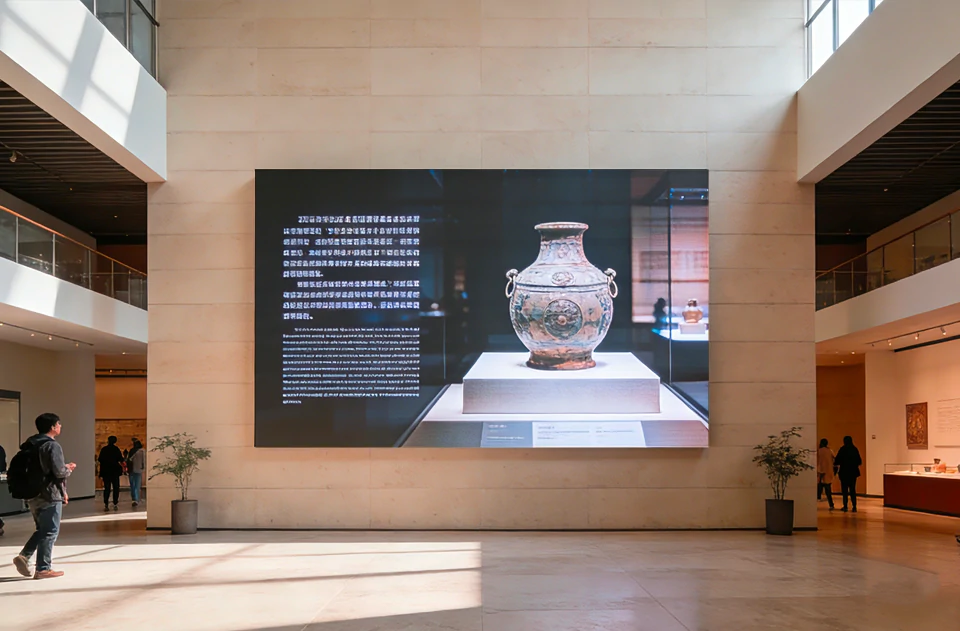
What is a COB LED Screen? What is a COB LED Screen? COB (Chip on Board) LED screens are a type of LED display technology where multiple LED chips are directly mounted onto a substrate to form a single module. This configuration allows for higher LED density, resulting in improved brightness, heat dissipation, and overall performance. How does COB technology differ from traditional LED technology? COB technology differs from traditional LED technology primarily in the packaging and arrangement of the LED chips: COB Technology: Multiple LED chips are mounted directly on the substrate, forming a single module. This results in higher LED density and better heat dissipation.Traditional LED Technology: Involves discrete LEDs or Surface Mounted Devices (SMD), where individual LEDs are placed separately on the circuit board. What are the advantages of COB LED screens over SMD LED screens? Higher Brightness: COB LED screens can achieve higher brightness levels due to the increased density of LED chips.Better Heat Dissipation: The direct mounting of LED chips on the substrate enhances heat dissipation, improving performance and longevity.Improved Color Uniformity: The close arrangement of LED chips results in better color mixing and uniformity.Reduced Glare: COB LEDs tend to produce less glare, making them suitable for environments requiring soft and uniform lighting.Enhanced Durability: The encapsulation process in COB technology provides better protection against physical damage and environmental factors. What applications are best suited for COB LED screens? COB LED screens are ideal for: High-resolution indoor displays: Such as command centers, control rooms, and broadcasting studios.Retail and commercial displays: Offering vibrant and eye-catching visuals in malls, showrooms, and retail stores.Corporate environments: For boardrooms, conference rooms, and presentation spaces.Entertainment venues: Including theaters, concert halls, and sports arenas.Public transportation hubs: Airports, train stations, and bus terminals for clear and bright information displays. What is the cost of COB LED screens compared to other LED technologies? COB LED screens are generally more expensive than traditional SMD LED screens due to the advanced manufacturing process and higher LED chip density. However, the total cost of ownership may be lower in the long run due to their improved durability and lower maintenance requirements. Are COB LED screens more energy-efficient than traditional LED screens? COB LED screens can be more energy-efficient due to their superior heat dissipation and higher brightness efficiency. This means they can achieve the same brightness levels as traditional LED screens while consuming less power. What is the resolution range for COB LED screens? COB LED screens offer a wide range of resolutions, from standard HD to ultra-high resolutions, depending on the pixel pitch and size of the screen. Common pixel pitches for COB LED screens range from 0.9mm to 2.5mm, allowing for resolutions up to 4K and beyond in large displays. How durable are COB LED screens in high-traffic areas? COB LED screens are highly durable in high-traffic areas due to their robust construction and protective encapsulation. The close arrangement of LED chips and the encapsulation process make them resistant to physical impacts, dust, and moisture, which are common in such environments. Can COB LED screens be used in outdoor environments? While COB LED screens are primarily designed for indoor use, they can be adapted for outdoor environments with additional weatherproofing and protective measures. The encapsulation provides some level of protection against environmental factors, but outdoor-specific designs are recommended for extreme conditions. What is the maintenance requirement for COB LED screens? COB LED screens have lower maintenance requirements due to their durable construction and better heat dissipation. Regular maintenance includes: Cleaning: Dust and debris removal using a soft, dry cloth or compressed air.Inspections: Periodic visual inspections to check for any signs of damage or wear.Software Updates: Ensuring the control software is up-to-date. What is the lifespan of a COB LED screen? The lifespan of a COB LED screen is typically around 50,000 to 100,000 hours of use. The superior heat dissipation and robust construction contribute to a longer operational life compared to traditional LED screens. How do COB LED screens handle heat dissipation? COB LED screens handle heat dissipation efficiently due to the direct mounting of LED chips on the substrate. This configuration allows for better thermal management, reducing the risk of overheating and extending the lifespan of the LEDs. What are the common sizes available for COB LED screens? COB LED screens are available in various sizes, from small panels for indoor use to large video walls. Common sizes include: Small Panels: 500mm x 500mm, 600mm x 600mmMedium Panels: 800mm x 800mm, 1000mm x 1000mmLarge Video Walls: Custom sizes tailored to specific installations and requirements Are there any specific installation requirements for COB LED screens? Installation requirements for COB LED screens include: Stable Mounting Structure: Ensuring a secure and stable structure to support the screen.Adequate Ventilation: Providing sufficient airflow to prevent overheating.Proper Power Supply: Ensuring the power supply meets the screen’s specifications.Professional Installation: It is recommended to have professional installation to ensure correct setup and alignment.Environmental Considerations: For outdoor use, additional weatherproofing and protective measures are necessary. What is a COB LED Screen? COB (Chip on Board) LED screens are a type of LED display technology where multiple LED chips are directly mounted onto a substrate to form a single module. This configuration allows for higher LED density, resulting in improved brightness, heat dissipation, and overall performance. How does COB technology differ from traditional LED technology? COB technology differs from traditional LED technology primarily in the packaging and arrangement of the LED chips: COB Technology: Multiple LED chips are mounted directly on the substrate, forming a single module. This results in higher LED density and better heat dissipation.Traditional LED Technology: Involves discrete LEDs or Surface Mounted Devices (SMD), where individual LEDs are placed separately on the circuit board. What are the advantages of COB LED screens over SMD LED screens? Higher Brightness: COB LED screens can achieve higher brightness levels due to the increased density of LED chips.Better Heat Dissipation: The direct
Was sind LED-Anzeigebildschirme mit Frontwartung?

What is a Front service LED display screens? A front service LED display screen, also known as a front access or front maintenance LED display screen, is a type of LED display that is designed for easy access and maintenance from the front side of the display, rather than requiring access from the rear or sides. This design feature simplifies the installation, servicing, and maintenance of the LED screen, making it a popular choice for a wide range of applications. Key features and characteristics of front service LED display screens include: 1. Front-Accessible Modules: The LED display is typically composed of individual LED modules that can be accessed and serviced from the front of the screen. This is in contrast to traditional LED displays where access is mainly from the rear, which can be challenging in tight spaces or when the display is mounted against a wall. 2. Modular Design: The display is made up of modular panels or tiles that can be easily removed and replaced without disturbing neighboring modules. This modularity simplifies maintenance and allows for quick repairs, as a malfunctioning module can be replaced without the need to dismantle the entire screen. 3. Space-Efficient: Front service LED displays are space-efficient, making them suitable for installations in areas with limited room for rear access. This design feature is particularly valuable in indoor spaces and applications where space constraints are a concern. 4. No Rear Clearance Required: Since front service LED displays don’t require rear access, they can be mounted directly against a wall or other surfaces, saving valuable space and making them ideal for storefronts, lobbies, and indoor venues. 5. User-Friendly: The design of front service LED displays is user-friendly, allowing technicians to perform routine maintenance and repairs without the need for special equipment or extensive downtime. This reduces maintenance costs and minimizes disruptions to the operation of the display. 6. Indoor and Outdoor Use: Front service LED displays are available for both indoor and outdoor applications, providing versatile options for a wide range of industries and use cases, from retail stores to sports venues. 7. Variety of Pixel Pitches: Front service LED displays are available in various pixel pitches, allowing users to choose the right resolution and image quality for their specific needs. This versatility makes them suitable for everything from large outdoor billboards to high-resolution indoor signage. 8. Simplified Installation: Installation of front service LED displays is straightforward due to the design that allows for easy front access. This can reduce the complexity of installations and save both time and labor costs. 9. Enhanced Accessibility: Access to components like power supplies, control systems, and wiring is also simplified in front service LED displays, making them more accessible for maintenance and troubleshooting. Front service LED displays have gained popularity in recent years, particularly in indoor and high-traffic applications, due to their practicality and convenience. They offer a solution for businesses and organizations that require eye-catching displays while prioritizing ease of maintenance and servicing. A front service LED display screen, also known as a front access or front maintenance LED display screen, is a type of LED display that is designed for easy access and maintenance from the front side of the display, rather than requiring access from the rear or sides. This design feature simplifies the installation, servicing, and maintenance of the LED screen, making it a popular choice for a wide range of applications. Key features and characteristics of front service LED display screens include: 1. Front-Accessible Modules: The LED display is typically composed of individual LED modules that can be accessed and serviced from the front of the screen. This is in contrast to traditional LED displays where access is mainly from the rear, which can be challenging in tight spaces or when the display is mounted against a wall. 2. Modular Design: The display is made up of modular panels or tiles that can be easily removed and replaced without disturbing neighboring modules. This modularity simplifies maintenance and allows for quick repairs, as a malfunctioning module can be replaced without the need to dismantle the entire screen. 3. Space-Efficient: Front service LED displays are space-efficient, making them suitable for installations in areas with limited room for rear access. This design feature is particularly valuable in indoor spaces and applications where space constraints are a concern. 4. No Rear Clearance Required: Since front service LED displays don’t require rear access, they can be mounted directly against a wall or other surfaces, saving valuable space and making them ideal for storefronts, lobbies, and indoor venues. 5. User-Friendly: The design of front service LED displays is user-friendly, allowing technicians to perform routine maintenance and repairs without the need for special equipment or extensive downtime. This reduces maintenance costs and minimizes disruptions to the operation of the display. 6. Indoor and Outdoor Use: Front service LED displays are available for both indoor and outdoor applications, providing versatile options for a wide range of industries and use cases, from retail stores to sports venues. 7. Variety of Pixel Pitches: Front service LED displays are available in various pixel pitches, allowing users to choose the right resolution and image quality for their specific needs. This versatility makes them suitable for everything from large outdoor billboards to high-resolution indoor signage. 8. Simplified Installation: Installation of front service LED displays is straightforward due to the design that allows for easy front access. This can reduce the complexity of installations and save both time and labor costs. 9. Enhanced Accessibility: Access to components like power supplies, control systems, and wiring is also simplified in front service LED displays, making them more accessible for maintenance and troubleshooting. Front service LED displays have gained popularity in recent years, particularly in indoor and high-traffic applications, due to their practicality and convenience. They offer a solution for businesses and organizations that require eye-catching displays while prioritizing ease of maintenance and servicing. NextWhat is a COB LED Screen?Next